How to Get a Startup Business Loan with No Money

Startups with limited capital focus mostly on equity and funding, but there are quite a few debt and loan financing options available for them. Here are some actionable strategies with real-world examples.

Let’s be honest—the phrase “startup loan with no money” sounds like an oxymoron, right? Something like “free lunch” or “jumbo shrimp.” But here’s the thing: thousands of entrepreneurs launch successful businesses every year without a fat bank account as their starting point.

How do I know? Well, I do a lot of quick videos on LinkedIn to help out entrepreneurs meet their funding goals.

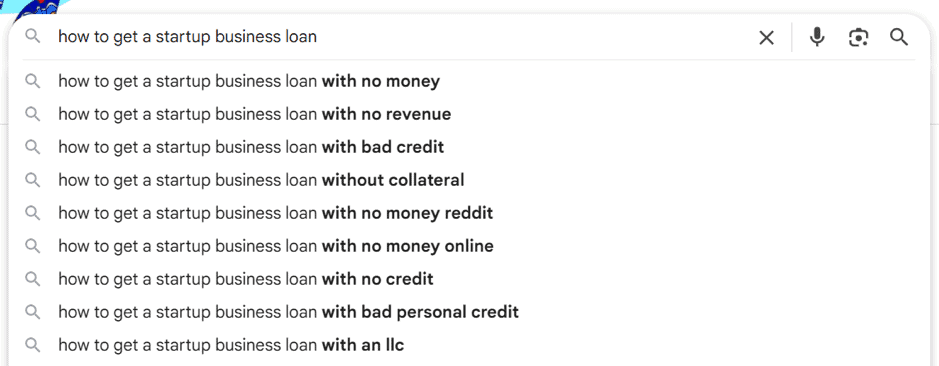
And I was recently doing some digging on Google to look up what wannabe entrepreneurs are searching for… That’s when I realized the sheer gap between the number of people who want to start a business and the ones who have the funds to do so.

If YOU’ve been googling something like this of late, let me tell you this: The key to starting up isn’t having money in the bank already—it’s understanding what lenders really want to see and knowing which doors to knock on.

The Reality Check: What “No Money” Actually Means

Okay, when we say “no money,” we’re talking about entrepreneurs who don’t have the traditional 20-30% down payment that most lenders prefer. Maybe you’ve got $2,000 in savings instead of $20,000. Or perhaps you’re living paycheck to paycheck but have a killer business idea and the drive to make it happen.

You’re not alone.

According to a study by the Federal Reserve, about one in three employer firms start with a capital of less than $10,000.

SO, WHERE DO YOU GET THAT MUCH NEEDED CAPITAL?

What Matters More Than Hard Cash in the Bank?

Nothing.

But there are some good alternatives: loans and credit lines.

Needless to say, business loans come with solid benefits. So how do you get them?

1. Your Personal Credit Score

This is your golden ticket. Even without business history, your personal credit tells lenders whether you pay your bills on time. If your score is 650 or higher, you’re in decent shape. Above 700? You’re looking good.

Pro tip: If your credit needs work, spend 3-6 months paying down credit cards and paying everything on time before applying. It’s worth the wait.

2. A Rock-Solid Business Plan

Think of your business plan as your loan application’s wingman. It needs to show:

  • Clear market demand for your product/service
  • Realistic financial projections
  • How you’ll use the loan money
  • Your path to profitability

Don’t write a 50-page novel. A concise, well-researched 5-8 page plan often works better.

3. Industry Experience

Have you worked in restaurants for 10 years and want to open your own? That experience is worth its weight in gold to lenders. Even if you don’t have restaurant experience but you’ve managed teams, handled budgets, or run any kind of business operation, highlight it.

Whatever kind of business you want to start—be it in manufacturing, retail, tech, construction, healthcare or trucking—we have the right financial solution.

The Loan Options That Don’t Require Big Money Down

Unlike what some people will have you believe, there are quite a few financing options that don’t require you to sacrifice your life savings before you start to build your dream. 

SBA Microloans: The Startup-Friendly Option

These loans start from $50,000 and go up to $5 million in the long-term. They’re designed specifically for startups and small businesses. The average SBA microloan is around $13,000—perfect for getting started without breaking the bank.

Quick example: Maria wanted to start a mobile pet grooming business. She had $1,500 saved and good credit. She got a $15,000 SBA microloan to buy equipment and a van. Total out-of-pocket? Just the $1,500 she already had.

Equipment Financing: Let Your Hardware Be Your Collateral

Need commercial kitchen equipment? A delivery truck? Manufacturing machinery? With easy equipment financing, the equipment itself serves as collateral, so you need little to no money down.

Quick example: James started a commercial cleaning company with a $25,000 equipment loan. He put down $2,500 (10%) and the cleaning equipment secured the rest. Within six months, the equipment had paid for itself.

PO Financing or Invoice Factoring: Turn Future Sales Into Cash Now

If you already have confirmed orders or contracts, you can use purchase order financing to get cash upfront. This works especially well for service businesses or B2B companies.

Online Lenders: Fast and Flexible

There are a lot of online companies (startups like you’d probably like to be) that focus more on your business potential than your current bank balance. They’re pricier than traditional loans but much more accessible for startups.

There are umpteen loan types out there you might not have heard of. Want to know what you don’t know? Here’s how to go about it…
Creative Strategies to Boost Your Chances

At QualiFi, our job is to help you meet your loanmate (read, business soulmate).

The Revenue-First Approach

Start generating revenue before you apply for a loan. Even $2,000-3,000 in monthly sales shows lenders that people actually want what you’re selling.

Quick example: Sarah started her social media management business from her kitchen table, using just a laptop and communication skills. After three months of freelance work generating $4,000/month on average, she applied for a $50,000 loan to buy some software and hire people. The revenue history made all the difference.

Partner Power

Consider bringing on a partner with better finances or credit. They don’t need to be a 50-50 partner—even a 20% partner with good credit can open doors.

Collateral Alternatives

Don’t have business assets? Consider

  • Your home (if you’re a homeowner)
  • Your car (if it’s paid off)
  • Investment accounts
  • High-value personal items

Important note: ONLY use personal collateral if you’re confident in your business plan and comfortable with the risk.

The Application Game Plan

What are the different places you can try to get a business loan?

Your Current Bank: They already know your financial history. If you’ve been a good customer, they might be more willing to take a chance on you.

Community Banks and Credit Unions: These institutions often have more flexibility than big national banks. They’re also more likely to consider your local market knowledge and community connections.

SBA Lenders: Find lenders in your area who specialize in SBA loans. They understand the programs and can guide you through the process.

Alternative Lenders: Online lenders, peer-to-peer platforms, and specialty lenders often have different criteria than traditional banks.

Red Flags to Avoid

Scams and frauds are dime-a-dozen in the business of business loans.

  • Advance fee scams: Legitimate lenders don’t ask for money upfront.
  • Guaranteed approval: No legitimate lender guarantees approval (but we do come close to it).
  • Pressure tactics: Good lenders give you time to review terms.
  • Too-good-to-be-true rates: If it sounds impossible, it probably is.

Go Forth and Make Money!

Funding a startup and financing its growth without equity isn’t about finding a magical lender who doesn’t care about risk. It’s about positioning yourself as a “good risk” despite limited capital. Focus on building your creditworthiness, creating a compelling business case, and exploring the right loan options for your situation.

Remember, every successful business owner started somewhere. The key is taking that first step with confidence, preparation, and realistic expectations. All the best!

Ready to explore your financing options? QualiFi can help you build the bridge between your business dreams and reality—even if your bank account isn’t quite there yet. Call 833.933.3665 to find out more!

Ready to get a 5 or 10 Year Term Loan to Meet Your Strategic Goals?

Find out the best options you have!

Does Applying for a Business Line of Credit Hurt Your Credit?