Can a Small Business Owner Truly Have Work-Life Balance?
Maybe but maybe not…

Maybe but maybe not…
Let’s start with a hard truth: if you’re a small business owner reading this on a Sunday night, you’ve probably already answered the question in the title.
But before we dismiss work-life balance as another much-chewed, hackneyed concept that doesn’t apply to entrepreneurs, let’s dig deeper into what the research actually tells us.
And see if we can emulate what “successful” business owners have figured out that the rest of us haven’t.
Conventional wisdom says small business owners sacrifice everything for their ventures. Today’s “hustle” narrative tells us that 80-hour weeks are a badge of honor. That sleep is for employees. That thinking about “balance” means you’re not committed enough.
But here’s what might surprise you: 51% of small business owners say work-life balance has been essential to their success. Not “nice to have” but “essential.”
So what’s really going on here? Can you truly build a successful business without sacrificing your health, relationships, and sanity?
The answer is more nuanced than you might think.
Before we dive into solutions, let’s acknowledge what we’re working with. Over a third of all small business owners report working more than 50 hours a week, every week. That’s significant, but it’s not the 100-hour weeks that startup mythology would have you believe.
More telling is this statistic: 87% of entrepreneurs struggle with at least one mental health issue. Anxiety, high stress, financial worries, burnout, and impostor syndrome were the most common, with each impacting more than 30% of survey participants. Over half of small business owners have experienced poor mental health over the past 12 months.
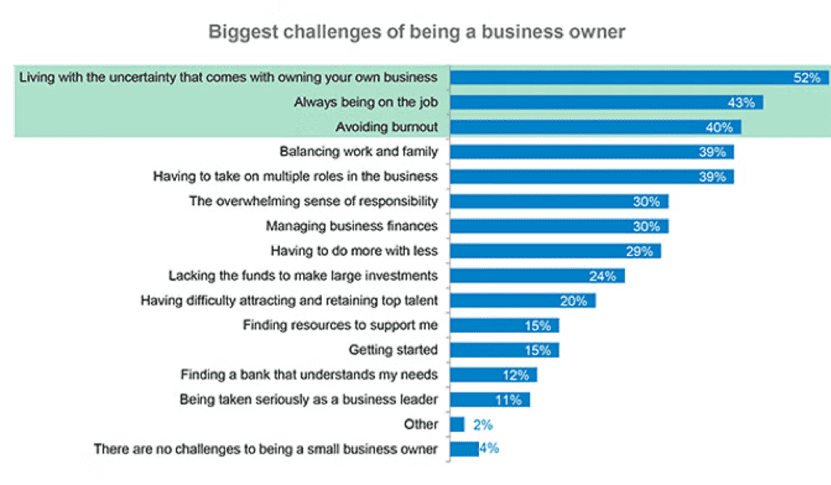
Image source: Bank of the West
But here’s the counterpoint that should make you pause: Small business owners who report being in a good or great place mentally also say their business is growing, compared to those who are feeling stressed and anxious or burned out.
The correlation is clear: your mental state and your business success are directly linked.
Want hassle-free business funding without running from one bank to another?
Maybe we’re asking the wrong question entirely. Instead of “Can you have work-life balance?” perhaps we should ask “What does sustainable success look like for a small business owner?”
The traditional concept of work-life balance—clocking out at 5 or 6 PM and not thinking about work until 8 or 9 AM the next day—was designed for employees, not owners. When your business is your baby, your financial security, and often your identity all rolled into one, the boundaries are naturally blurred.
But successful business owners have figured out something important: it’s not about perfect balance, it’s about intentional integration.
Consider Seema, who owns a successful marketing agency. She doesn’t work traditional hours – she takes a long lunch to spend time with her daughter after she returns from school, but then works from 9-11 PM after the kid is in bed. She checks emails on Saturday mornings but protects Sundays for family time. Is this “balance”? Not in the traditional sense. But it’s sustainable, and her business has grown 30-40% YoY for three consecutive years.
Here’s something interesting from the data: Gen Z entrepreneurs are less inclined to work longer hours—only one in 10 report putting in over 50 hours weekly. This generation is redefining what entrepreneurial success looks like, and they’re not buying into the “grind until you die” mentality.
They’re leveraging technology differently, setting boundaries from day one, and viewing their businesses as vehicles for the life they want rather than the thing that consumes their life. Nearly half of the entrepreneurs surveyed by Inc.com said continued improvement of their work-life balance is a priority in 2025. About 40% of participants said they plan to start using artificial intelligence apps as a means of clawing back some of that work time.

This shift suggests that maybe the question isn’t whether you can have work-life balance as a business owner, but whether you’re willing to build your business in a way that supports it.
Let’s be honest about what makes work-life balance challenging for small business owners:
Financial Pressure: 30% of small business owners don’t take a salary at all, choosing to reinvest in their business, while 85% of the rest take home less than $100,000 a year. When you’re not paying yourself consistently, it’s hard to step away from revenue-generating activities.
The Everything-Is-Your-Responsibility Reality: Unlike employees who can leave work at work, business owners carry the weight of every decision. Payroll needs to be met, customers need to be satisfied, and problems don’t wait for business hours.
The Fear Factor: What if your biggest client calls while you’re at your kid’s soccer game? What if that deal falls through because you weren’t available to answer a Saturday morning email? The fear of missing opportunities keeps many business owners tethered to their phones 24/7.
Identity Fusion: For many entrepreneurs, the line between “who I am” and “what I do” is completely blurred. When your business struggles, you feel like a failure. When it succeeds, you feel validated. This emotional fusion makes it nearly impossible to “turn off.”
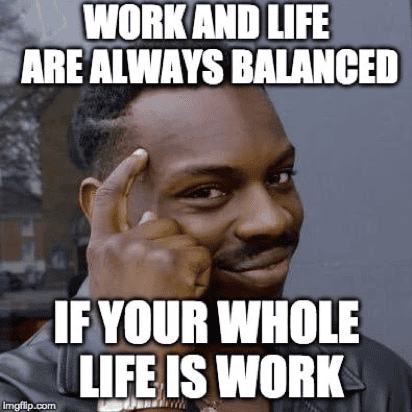
After analyzing the experiences of business owners who have achieved some semblance of work-life integration, several strategies emerge:
Systems Over Self
Business owners who successfully create boundaries are those who build systems that don’t require their constant presence. They document processes, train team members, and create workflows that function without their input.
Take Mike, who owns three auto repair shops. He could work 70 hours a week putting out fires, but instead he spent two years building management systems, training assistant managers, and creating processes for common scenarios. Now he reviews reports daily but rarely needs to be physically present at any location.
Revenue Diversification
Business owners with just one major client or revenue stream feel like they can’t afford to step away. Those with diversified income streams can afford to lose one client without panicking. This security translates to mental freedom.
Technology as a Boundary Tool
Successful entrepreneurs use technology to create boundaries, not eliminate them. They use project management tools to keep teams updated without constant meetings, automated systems to handle routine communications, and scheduling tools to protect personal time.
Time Blocking and Micro-Boundaries
Many balanced business owners follow an 80-20 availability rule: they’re fully present and involved 80% of the time during business hours, while blocking off 20% of their time for important personal activities (family dinners, weekends, vacations, exercise) completely. This isn’t perfect, but it’s sustainable.
Seasonal Rhythms and Bursts
Some business cycles require more intensity than others. If you run a seasonal business, plan for mad months as well as recovery periods. A retail business owner might work 60-hour weeks during the holiday season but take extended time off in January.
Energy Management Over Time Management
Remember that managing your energy is more important than managing your time. Smart entrepreneurs do high-concentration work when they’re mentally sharp and save administrative tasks for low-energy periods.
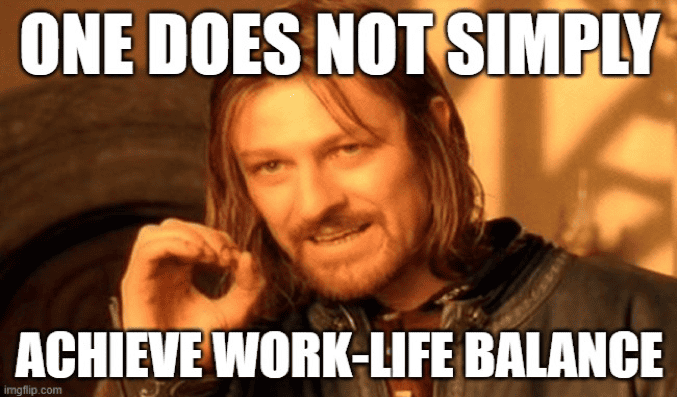
Here’s what the most successful business owners understand: work-life balance isn’t about achieving some perfect equilibrium between professional and personal time.
The happiest entrepreneurs out there aren’t the ones who are less committed to their businesses. They’re the ones who realize that their personal wellbeing directly impacts their business performance.
So can YOU—as a small business owner—truly have work-life balance?
Maybe not in the traditional sense. But you can absolutely build a business that enhances the life you want to live, rather than consuming or hijacking it.
The key is being intentional and deliberate about how you define success, how you structure your business, and how you protect the things that matter most to you.
Remember: you’re building your best business, not your last.
Fuel Your Growth with Simplified, Super-Quick Business Loans!
 https://goqualifi.com/wp-content/uploads/2026/07/3d97b08e837105d6168e9f4502cf2241.jpg
800
1200
faras@brandmaximise.com
https://goqualifi.com/wp-content/uploads/2024/01/qualifi-new-logo-300x106.jpg
faras@brandmaximise.com2026-07-27 10:00:002026-07-27 06:07:51Only 1 in 4 Business Loans Get Approved at Big Banks. Here’s the Other Path.
https://goqualifi.com/wp-content/uploads/2026/07/3d97b08e837105d6168e9f4502cf2241.jpg
800
1200
faras@brandmaximise.com
https://goqualifi.com/wp-content/uploads/2024/01/qualifi-new-logo-300x106.jpg
faras@brandmaximise.com2026-07-27 10:00:002026-07-27 06:07:51Only 1 in 4 Business Loans Get Approved at Big Banks. Here’s the Other Path. https://goqualifi.com/wp-content/uploads/2026/07/604c187382d8778d7851c9a49901c3e8.jpg
472
736
faras@brandmaximise.com
https://goqualifi.com/wp-content/uploads/2024/01/qualifi-new-logo-300x106.jpg
faras@brandmaximise.com2026-07-27 08:00:002026-07-27 05:42:50The Questions to Ask Before You Sign ANY Business Loan
https://goqualifi.com/wp-content/uploads/2026/07/604c187382d8778d7851c9a49901c3e8.jpg
472
736
faras@brandmaximise.com
https://goqualifi.com/wp-content/uploads/2024/01/qualifi-new-logo-300x106.jpg
faras@brandmaximise.com2026-07-27 08:00:002026-07-27 05:42:50The Questions to Ask Before You Sign ANY Business Loan https://goqualifi.com/wp-content/uploads/2026/07/976ae34c3ce36f791560bb987ef5dfea.jpg
736
736
faras@brandmaximise.com
https://goqualifi.com/wp-content/uploads/2024/01/qualifi-new-logo-300x106.jpg
faras@brandmaximise.com2026-07-20 11:32:472026-07-20 11:32:56How to Build Business Credit From Zero (So Lenders Take You Seriously)
https://goqualifi.com/wp-content/uploads/2026/07/976ae34c3ce36f791560bb987ef5dfea.jpg
736
736
faras@brandmaximise.com
https://goqualifi.com/wp-content/uploads/2024/01/qualifi-new-logo-300x106.jpg
faras@brandmaximise.com2026-07-20 11:32:472026-07-20 11:32:56How to Build Business Credit From Zero (So Lenders Take You Seriously) https://goqualifi.com/wp-content/uploads/2026/07/27f42722421d80cf62243fc319dbe93b.jpg
1024
1024
faras@brandmaximise.com
https://goqualifi.com/wp-content/uploads/2024/01/qualifi-new-logo-300x106.jpg
faras@brandmaximise.com2026-07-20 11:13:512026-07-20 11:13:57Time in Business: Why 6 Months vs. 2 Years Changes Everything About Your Options
https://goqualifi.com/wp-content/uploads/2026/07/27f42722421d80cf62243fc319dbe93b.jpg
1024
1024
faras@brandmaximise.com
https://goqualifi.com/wp-content/uploads/2024/01/qualifi-new-logo-300x106.jpg
faras@brandmaximise.com2026-07-20 11:13:512026-07-20 11:13:57Time in Business: Why 6 Months vs. 2 Years Changes Everything About Your Options https://goqualifi.com/wp-content/uploads/2026/07/b683ae17ccf6783224f69c2ba548e4c5.jpg
800
1200
faras@brandmaximise.com
https://goqualifi.com/wp-content/uploads/2024/01/qualifi-new-logo-300x106.jpg
faras@brandmaximise.com2026-07-17 10:00:002026-07-16 23:46:005 Signs It’s Time to Refinance Your Business Debt
https://goqualifi.com/wp-content/uploads/2026/07/b683ae17ccf6783224f69c2ba548e4c5.jpg
800
1200
faras@brandmaximise.com
https://goqualifi.com/wp-content/uploads/2024/01/qualifi-new-logo-300x106.jpg
faras@brandmaximise.com2026-07-17 10:00:002026-07-16 23:46:005 Signs It’s Time to Refinance Your Business Debt https://goqualifi.com/wp-content/uploads/2026/07/e9350d8fc83cf54426a012fe7d558a43.jpg
799
1199
faras@brandmaximise.com
https://goqualifi.com/wp-content/uploads/2024/01/qualifi-new-logo-300x106.jpg
faras@brandmaximise.com2026-07-17 08:00:002026-07-16 23:32:58From Side Hustle to Real Business: When to Get Your First Line of Credit
https://goqualifi.com/wp-content/uploads/2026/07/e9350d8fc83cf54426a012fe7d558a43.jpg
799
1199
faras@brandmaximise.com
https://goqualifi.com/wp-content/uploads/2024/01/qualifi-new-logo-300x106.jpg
faras@brandmaximise.com2026-07-17 08:00:002026-07-16 23:32:58From Side Hustle to Real Business: When to Get Your First Line of Credit https://goqualifi.com/wp-content/uploads/2026/07/1b18f30f92440fb57ed7e5d8c464f1f8.jpg
1080
1080
faras@brandmaximise.com
https://goqualifi.com/wp-content/uploads/2024/01/qualifi-new-logo-300x106.jpg
faras@brandmaximise.com2026-07-16 10:00:002026-07-15 23:56:44What Underwriters Actually Look At (Beyond Your Credit Score)
https://goqualifi.com/wp-content/uploads/2026/07/1b18f30f92440fb57ed7e5d8c464f1f8.jpg
1080
1080
faras@brandmaximise.com
https://goqualifi.com/wp-content/uploads/2024/01/qualifi-new-logo-300x106.jpg
faras@brandmaximise.com2026-07-16 10:00:002026-07-15 23:56:44What Underwriters Actually Look At (Beyond Your Credit Score) https://goqualifi.com/wp-content/uploads/2026/07/6aea19b0ce6fc77f1c75c60331ec5ed2.jpg
562
750
faras@brandmaximise.com
https://goqualifi.com/wp-content/uploads/2024/01/qualifi-new-logo-300x106.jpg
faras@brandmaximise.com2026-07-16 08:00:002026-07-15 23:46:50Staffing Agency Cash Flow: Funding Payroll While You Wait 30–60 Days to Get Paid
https://goqualifi.com/wp-content/uploads/2026/07/6aea19b0ce6fc77f1c75c60331ec5ed2.jpg
562
750
faras@brandmaximise.com
https://goqualifi.com/wp-content/uploads/2024/01/qualifi-new-logo-300x106.jpg
faras@brandmaximise.com2026-07-16 08:00:002026-07-15 23:46:50Staffing Agency Cash Flow: Funding Payroll While You Wait 30–60 Days to Get Paid https://goqualifi.com/wp-content/uploads/2026/07/0d5ad384e74222d6be943131a3517f4a.jpg
736
736
faras@brandmaximise.com
https://goqualifi.com/wp-content/uploads/2024/01/qualifi-new-logo-300x106.jpg
faras@brandmaximise.com2026-07-15 10:03:162026-07-15 10:03:22100% Bonus Depreciation Is Back: Why 2026 Is the Year to Finance Equipment
https://goqualifi.com/wp-content/uploads/2026/07/0d5ad384e74222d6be943131a3517f4a.jpg
736
736
faras@brandmaximise.com
https://goqualifi.com/wp-content/uploads/2024/01/qualifi-new-logo-300x106.jpg
faras@brandmaximise.com2026-07-15 10:03:162026-07-15 10:03:22100% Bonus Depreciation Is Back: Why 2026 Is the Year to Finance Equipment